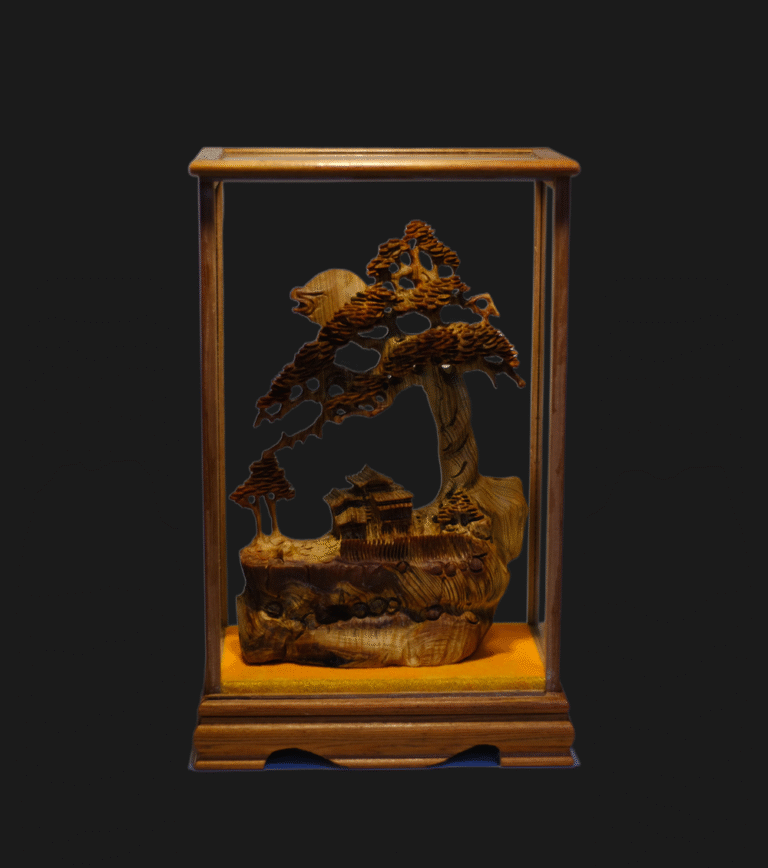
“Taihang Arborvitae,” often called Taihang cedar, is a testament to the vicissitudes of nature. Its complex forms, ever-changing textures, and resinous fragrance offer a layered sensory experience. As the eye follows the grain, natural oils continue to release their quiet aroma.
China’s incense culture can be traced back thousands of years. In folklore there is a saying: “Thousand-year-old pine, ten-thousand-year-old cedar.” Growing high on exposed cliffs, Taihang arborvitae endures snow, dry winds, and dramatic geological change. These conditions create dense wood rich in resin and character.
The fragrance of Taihang cedar carries the resilience of a life lived on the cliff face.
Fruit-like fragrance
Aged material from the Taihang Mountains is shaped by a cold and arid climate. The wood is dry and hard, with clear oil. Its fragrance can feel fresh and faintly fruity—cool, clean, and never overwhelmingly medicinal.
Sweet fragrance
Older Taihang and Qinling cedar may develop a fuller sweetness. Genuine aged wood often loses the sharp resin note of new material and reveals a softer, milk-like warmth prized by collectors.
Medicinal fragrance
Material from more humid regions can become darker and oil-rich. Its aroma combines resin, mint, earth, and sweetness, giving each piece a distinct olfactory profile as individual as its grain.
A cultural presence
Beyond its physical beauty, arborvitae has long represented perseverance, self-cultivation, and quiet strength. In a contemporary interior, the material still creates a contemplative atmosphere—an object that asks to be looked at slowly and lived with over time.